
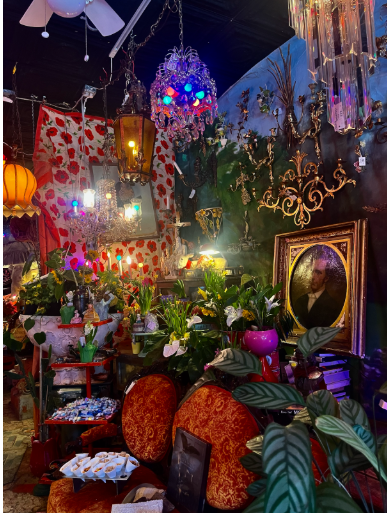














If you visit Dinkytown today, you’ll likely see swarms of university students parading past chain restaurants and abandoned businesses adorned with aging murals. There’s an obvious contrast between the modern neighborhood and its remnants from years past. Dinkytown is undergoing a complete metamorphosis as decades-old shops go out of business, corporate stores pop up around campus, and residents lose the certain spark that once created a distinctivly vibrant atmosphere. So, how did such a hub for the arts, counterculture, and advocacy become completely homogenized?
Dinkytown is a neighborhood right on the University of Minnesota’s Twin Cities campus. Best known for lively art, unique architecture and businesses, and having a majority of student residents, Dinkytown is a place that college students have been making their own for decades. However, the neighborhood is one of many that is experiencing a gentrification and commercialization crisis. One of the most devastating results of this are increases in rent for both residents and business owners who oftentimes are forced to leave. They end up having to search for less-liveable homes and cut spending on necessary items. In the case of businesses, they’re forced shut down their livelihood and sell their shop to a wealthier company.
Traditionally, citizens fought against this through protesting in the streets, creating art, or by boycotting large companies, along with supporting local small businesses. Since Dinkytown has consistently had a median age of around 20 for a long span of time, these efforts were almost entirely led by the young students of the neighborhood. But in recent years there has been a switch. Dinkytown is now at a point where commercialization has won students over. Everything that Dinkytown is known for is disappearing, with nobody advocating for regrowth. Without local arts and business to encourage growth, students are not exposed to the ideas that have kept the neighborhood thriving in years past. This allows for more destruction of the landscape, and for the cycle to continue.
Clearly, the biggest factor of whether or not Dinkytown will make it out of this predicament is youth involvement. Dinkytown is not the only place experiencing this. We are at a point in history that requires young voices to be heard if we want to create a better future. Now is not the time to allow for mass uniformity. It has been proven that historically, young people hold the most influence and power socially, which is something that should be taught to upcoming generations. And although change is inevitable, if you want to exist in a world that promotes diversity, distinction, and community.
It’s your job as young people to make that happen. So wherever you find yourself, speak out. It may be exactly what that place needs to hear.