










Unity Through Service
Abigail Vencl, Staff Writer
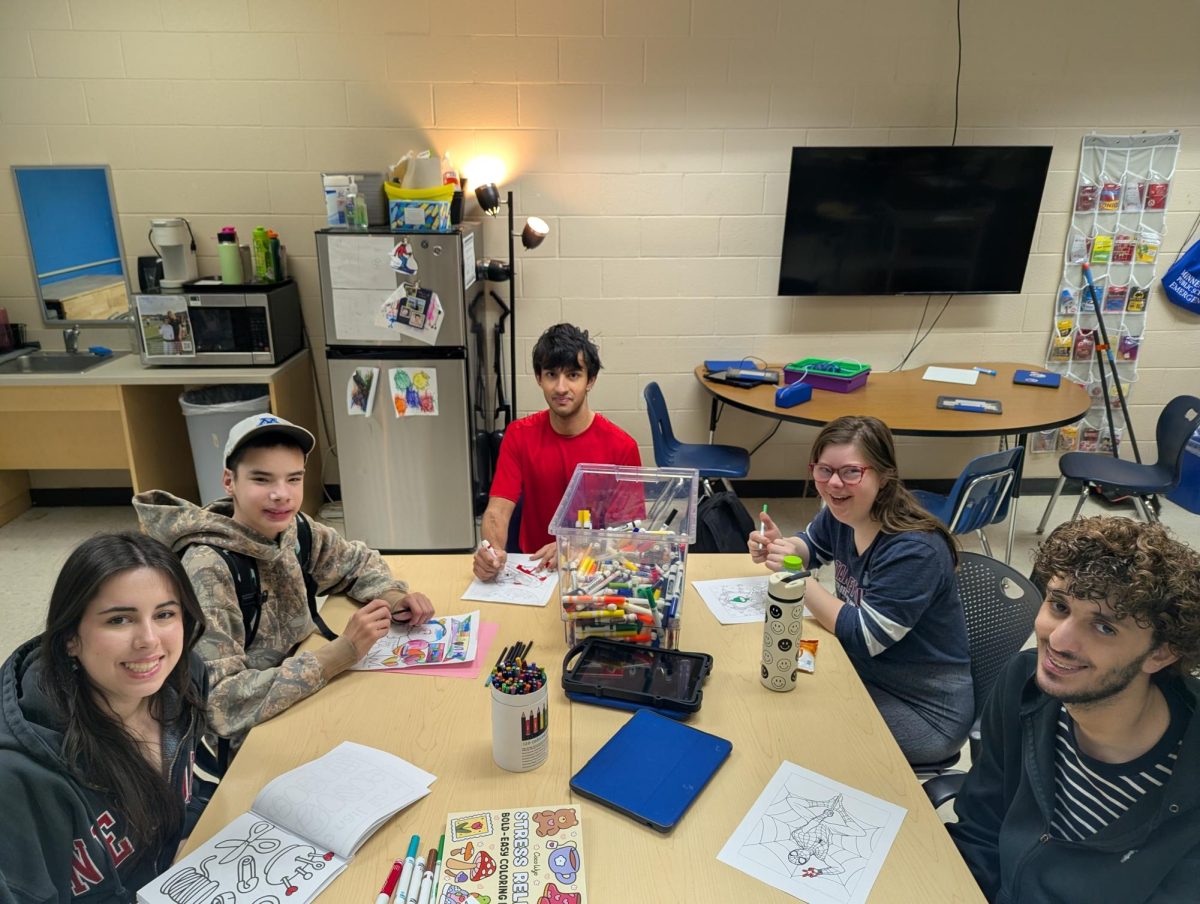
Minnetonka High School students love service. A majority of students are involved in some sort of community service activity, and as a school, we have nearly 30 different service clubs. These clubs focus on a wide variety of community needs and interests from Bunny Besties to the Tonka Neighbors Initiative. Many students who are involved in service use it as a way to feel a sense of purpose and give back to the community.
In a time where the world can feel divisive and isolating, service is more important than ever. Engaging in service benefits both the individual and the group being served. Service can be a path forward to a better future, where unity and support are the main priorities.
Every Child Deserves a Bed
Ella Farnum, Staff Writer
In 2017, Jen Grauwels began selling all of her extra belongings to raise money so that children in Guatemala could sleep in a warm bed at night. Since then, 1,524 children have received a brand new bed where they can feel comfortable and safe.
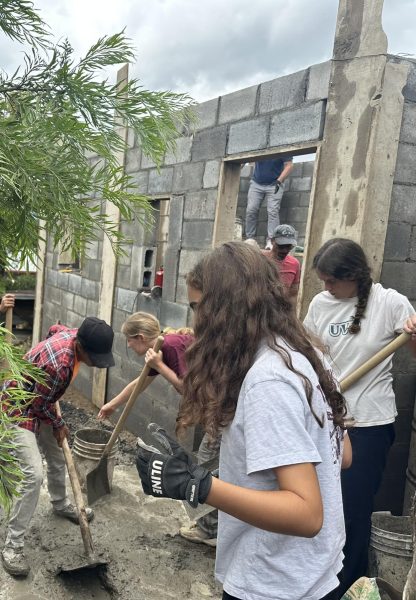
8 years ago, Grauwels went to Sumpango, Guatemala through a mission trip organization called Breaking Cycles. Breaking Cycles’ mission is to stop negative trends such as hunger, lack of education, abuse, alcoholism, and addictions by giving education scholarships and opportunities for people to better their lives. Grauwels knew there was a need there; she knew she wanted to help break the cycle of poverty in Sumpango, and she knew that this trip could change her. What she didn’t know was that, with the help of Breaking Cycles, this trip would motivate her to sell all of her extra belongings to raise money for the Guatemalan children she grew to love so much.
The idea for the Every Child Deserves a Bed sale started with one family and their belongings. During a home visit, Grauwels saw a single cardboard box sitting outside. Inside the box was the entire family’s most prized possessions. She says that once she got home she “walked in [her] basement and saw these bins,” referring to boxed items she no longer used. She knew that other people in her neighborhood also had these stored bins of unused items, and they could use them for good. There was something very special about this thought that pulled on her heart. This feeling is what sparked an idea that would affect 266 Guatemalan children in 2024 alone, even though they are 2,751 miles away.
A Guatemalan girl named Estefanny has needed open heart surgery for around 5 years. Sadly, she has not been able to get one due to high blood pressure. Estefanny needed a bed and a room because she wouldn’t survive if she went home to sleep on the floor. She is a giggly, smart little girl who loves to play games. Two brothers around 14 years old received a bed because they were both sleeping on one small table. These stories are why every single act of generosity makes a difference. “We want to give kids a blanket and a bed and make them feel valued.”
Through initiatives like educational sponsorships, construction projects, and more, Breaking Cycles is empowering people of all ages to bring positive change and foster self-sufficiency. Grauwels describes them as, “so clearly doing good in such a tangible way,” that she just “couldn’t not support that.”
The impact of Breaking Cycles can not be measured in numbers, because the effect is limitless. The goodness and generosity emanating from the people working there has a ripple effect on the community of Guatemala. You never know the impact your donations can make on society, or the cycles you can break with your kindness. So, if you feel that tug on your heart to give, Jen Grauwels encourages you to “not expect someone else to make the difference,” because you “will be the one who is blessed” when you give.
ASL Honor Society: Building Homes and Connections
Teagan Welsch, Feature Editor
Hunched over the subfloor in a newly constructed home, Dorothy Moehrl, ‘26, lays laminate flooring in 30°F weather. It may come as a surprise, but this is just one of the many ways that Moehrl gets involved with the American Sign Language Honor Society, or ASLHS, at Minnetonka High School.
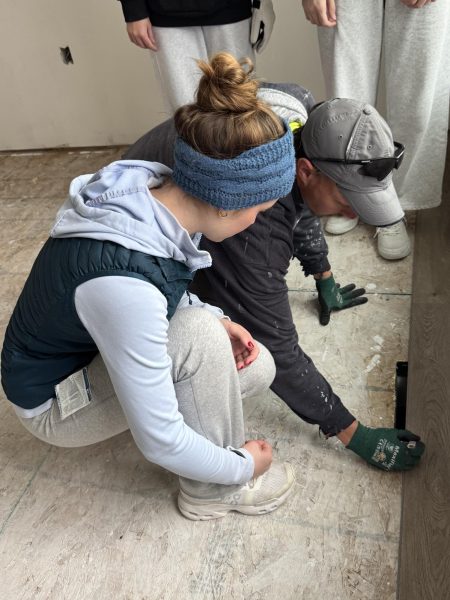
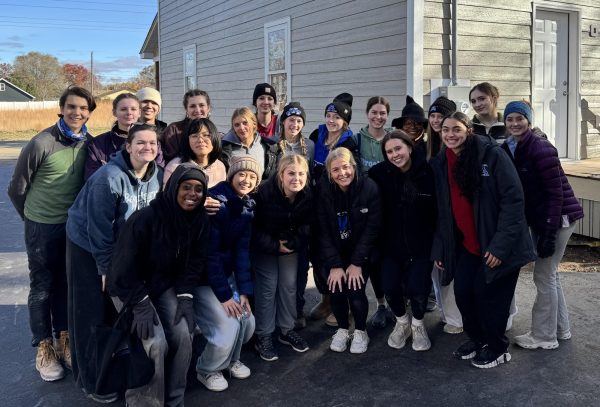
On November 10, ASLHS went on a field trip to help build a house for Habitat for Humanity. At the construction site, 20 ASL students dedicated their school day to installing flooring, drywall, and ceilings. Learning how to wield various construction tools was an important aspect of the day, but another meaningful part of the day, according to Moehrl, was “learn[ing] a lot of teamwork and trial and error strategies.”
Collectivism, the idea of interconnectedness and the emphasis on group welfare, is a key part of the Deaf community. In a world that’s built for hearing people, a strong support system is key to navigating unfair systems that are often inaccessible to the Deaf community. The work of ASLHS tries to facilitate this idea of communal support by serving those in need.
Not only have the members of ASLHS helped construct houses, but they have also committed to tutoring lower levels of ASL students at the high school. As an ASL 3 student, Moehrl has had the opportunity to connect with a student once a week and help her develop her ASL skills. “I like to watch people grow in their ASL skills,” she says. “It’s really fun to see people improve.”
ASLHS proves that volunteer work not only allows people to give back to their community, but also to bring people together through their shared interests of making the world a better place.
Whether they are building homes or fostering signing skills, ASLHS is devoted to crafting a community that is welcoming and educational. “Our goal is to help people learn more sign language and learn about the Deaf community,” she says.
Finding Purpose
Margot Sullivan, Feature Editor
The Minnetonka school district— and all those who volunteer at Breaking Cycles and Habitat for Humanity— exemplify the innate human urge to find purpose. One of the characteristics that unites humans is the need for purposeful and challenging work. Being challenged is what sparks creativity and provides opportunities for growth. As described by Aristotelian philosophy, the ultimate goal in life is to be a good person through doing good things. Many ancient philosophers, like Aristotle and Immanuel Kant, believed that in order to live a good life you must help others when compelled. While simply volunteering may not tell the whole story of someone’s morals, it is commonly assumed that those who consistently contribute to their community are of strong character. Conversely, ScienceDirect found that, “people can readily detect the egoistic tendencies of others and modify their behavior by cooperating less and sharing fewer resources with them.”
The 19th century philosopher Auguste Comte’s concept of altruism—actions done solely for others without thought of yourself—was created against the backdrop of a personal tragedy, that being the death of his close friend. His loss inspired him, and he began to practice altruism in his life. Similarly, people have been inspired to volunteer following the COVID-19 pandemic. The United States Census Bureau notes that the 2022–2023 volunteer rates, while still lower than before the pandemic, were rapidly growing even in the face of lingering challenges from the previous years. This rapid increase could likely be attributed to a similar reason that Comte promoted altruism: in the wake of tragedy, people have a desire to help. The National Library of Medicine states that in the aftermath of traumatic events, “survivors develop communities of mutual aid, engage in widespread acts of altruism, and report a heightened sense of solidarity with one another.”
Acts of service for others can also benefit mental well being. According to the National Library of Medicine, “higher levels of moral identity, empathy, and volunteering [virtues] are associated with increased self-esteem and psychological well-being.” In turn, they found that practices of altruism can also have physical rewards. You are less likely to have health problems, and in some cases, have an extended life expectancy. Volunteering is an amazing opportunity to connect with your community. Whether the act of volunteering makes you a good person or not, take time to learn who is in need around you, and maybe you’ll uncover a hidden purpose you didn’t know you had.