
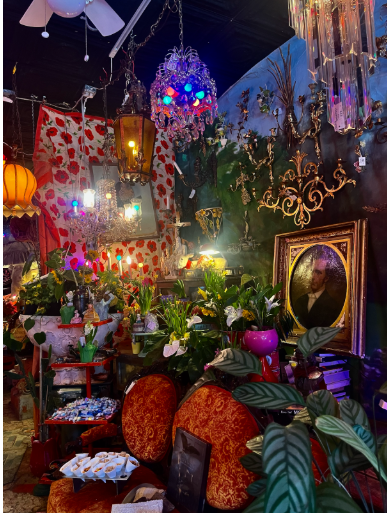













Thrifting has been trending lately. Places like Goodwill have become a popular hangout spot for friends. Shopping with friends is not a new concept, so why has secondhand suddenly become so popular? Part of its popularity seems to stem from the vintage style of dressing that teenagers are trying to recreate. Olivia Peterson, ‘26, explains, “I think it’s something where it has that kind of addictive nature where every time you go back, you don’t know what you’re going to get. So it just kind of makes you want to keep going and going.”
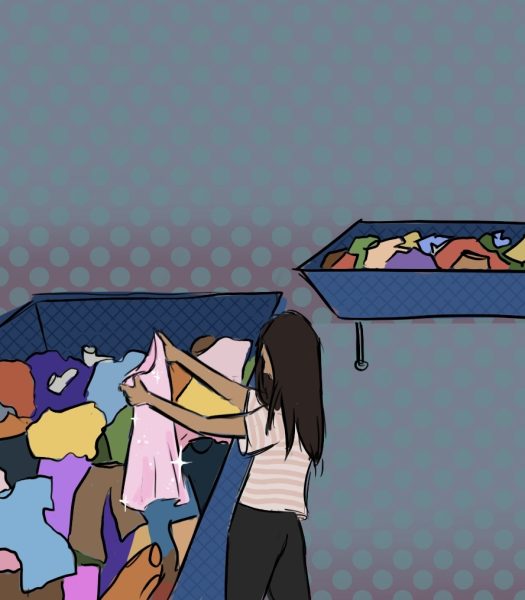
Social media platforms like Pinterest and TikTok also play a role in thrifting’s growth. Influencers share their finds and inspire those watching to find similar goods. This has given secondhand shopping a boost since teenagers are now associating this activity with individuality and a unique style. “It is kind of rewarding to get clothes that have been loved before,” Peterson states.
Peterson also describes the change in how secondhand shopping is considered. “Before it was definitely more looked down upon to have clothing that isn’t from big brands, but [thrifting] has had a huge resurgence and I guess it’s just something that’s not really looked down upon anymore, instead it’s something that everyone does.”
Meyer Lengeling, ‘26, says, “an important part of thrifting for me is actually donating to the places that I go to. So not just going there to find good clothes, but also […] supporting the community by donating things that I’m not using anymore that I think other people would find a good use for. So that it’s like a give and take sort of relationship instead of just only taking whatever is best.”
When people choose to shop secondhand, they might not realize the positive impact they’re making on the environment. To understand the influence this choice has, people first need to understand what fast fashion is. When there are constantly new trends, clothing brands will try to keep up with them while also maintaining lower prices. This means that they aren’t worn a lot since there will soon be another style. Overall, this hurts the environment from many sides, including an increase in microplastics, water pollution, and carbon emissions.
“Buying from a thrift store makes me feel like I’m actually helping the environment by not contributing to fast fashion,” Lengeling says.
